Reflect • Heal • Grow • Shine
You are loved. You are enough. You are her. ♥
I AM DADDY'S GIRL AND I'M BUILDING MY OWN CROWN.
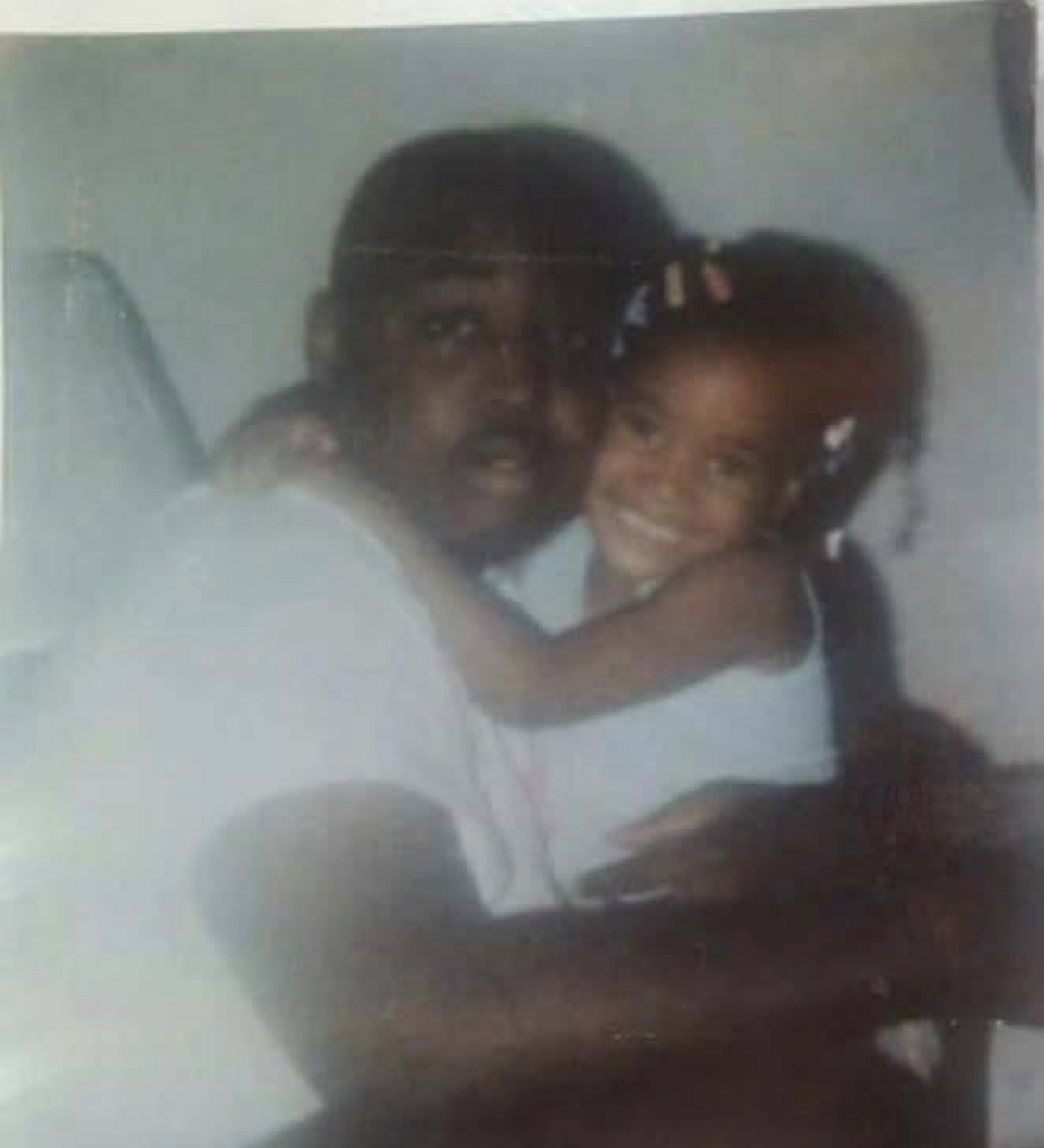
I was five years old when my father was taken from me.
Not lost. Taken.
And nobody knew what to say to a little girl carrying that kind of silence.
There was no journal.
No safe place to put the confusion.
No words that reached deep enough to say:
you are still whole… even after this.
So I learned to carry it. Quietly.
As I grew older, life didn't get softer.
I survived things that tried to break me in different ways.
Loss. Violence. Pain that doesn't always leave visible marks.
And what I realized is this:
little girls grow up…
but their unanswered pain doesn't disappear.
It just gets quieter.
Heavier.
Harder to name.
And nobody is saying it loud enough:
So I created what I needed but never had.
Daddy's Lil Girl is not just a journal.
It's a place to release what you've been holding.
A place to speak to the father you lost.
A place to comfort the little girl inside you who never got the chance to be held through it.
This is for:
Because healing doesn't come from pretending you're okay.
It comes from finally being seen.
Every girl deserves to hear she is enough.
Not someday.
Not when she heals.
Right now. At every age.
This was created with you in mind.
Not as a reminder of what you lost —
but as a space to remind you of who you still are.
You are not alone.
You were never meant to carry this by yourself.
Where the journey begins. Big stickers, bright colors, and words that plant seeds of strength in the smallest hearts.
Drawing prompts, coloring pages, and creative spaces where feelings become art. Not just filling pages — discovering who she is.
Simple, powerful words woven into every page. Words she can say out loud. Words that become her foundation.
Beautiful, sparkly stickers she'll treasure. Mark milestones. Decorate her truth. Build a visual story of who she is becoming.
She's navigating a bigger world now. Friendship, identity, growing pains. This journal meets her right where she is.
Prompts that help her understand who she is, what she values, and what makes her uniquely powerful.
Deeper questions. Real conversations with herself. A safe place to process the feelings she doesn't know how to name yet.
Activities to strengthen bonds, process social challenges, and understand what real friendship looks and feels like.
The world is loud. She needs a quiet place to hear her own voice. Goal-setting, self-love, navigating transitions with confidence.
Dream boards, goal tracking, and a clear path to the future she wants. She's not just surviving — she's building.
Daily rituals, affirmation cards to keep, and gentle reminders that she is enough exactly as she is right now.
From high school pressures to becoming an adult. Tools for confidence, boundaries, and speaking her truth.
Deep emotional release. Breaking patterns. Reclaiming identity. This is where the real work — and the real healing — begins.
Tap any affirmation to hold it in your heart.
A moment to honor your growth.
These messages were written for you. Read them slowly. Let them land.
I need you to know that. If I could have stayed, I would have. Some things were bigger than my choice. But you were never the reason I wasn't there.
Every step you take. Every time you choose yourself. Every morning you get up when it's hard. I see it all. I am watching, and I am in awe of you.
None of it was punishment. None of it was because you weren't enough. You were always worth fighting for. Life was just cruel in ways that had nothing to do with you.
Especially on those days. The days you barely made it through. The days you cried and got up anyway. Those are the days I'm most proud of you.
That emptiness you felt — the missing piece — it was never proof that you were lacking. You were always whole. The world just didn't always show you your reflection clearly.
When you wonder where your resilience comes from — some of it came through me. You carry pieces of me with you. And I carry pieces of you. That's how this works.
Imagine he's right here. What would he say?
This is what makes it more than a journal.
It's a healing space.
A guided 5-step healing exercise. Take it one question at a time. There's no wrong answer here.
You don't have to solve this today.
Showing up is enough.
You don't have to hold it together right now.
This space is here for exactly this moment. You're safe here.
Breathe in for 4… hold for 4… out for 4… hold for 4.
Repeat 4 times.
You're still here. That's enough.
Name 5 things you can see · 4 you can touch · 3 you can hear · 2 you can smell · 1 you can taste
"This moment is hard.
But you've survived hard before.
And you're still here."
Forgiveness is not forgetting. It's not excusing. It's choosing yourself.
Tap any affirmation to let it settle in you.
This is the crescendo. This is you claiming yourself back.
Read each one out loud if you can.
This is your daily ritual. A few minutes just for you. Come back whenever you need to.
Daddy's Lil Girl is more than a journal. It's a declaration that every girl deserves affirmation at every age, that healing is allowed to be colorful, and that the bravest thing a woman can do is remember who she was before the world told her who to be.
Order Your Journal $29 · Free shippingJoin our list and we'll let you know when journals are ready to order.
You've trusted us with something sacred. Here's extra support for the journey — deep, real, and made for you.
A compassionate guide on navigating grief after losing your father.
What grief actually looks like, permission to feel everything, and gentle steps that actually help — written in the same warm, real voice as the rest of your healing space.
Read the Guide →Age-accessible emotional literacy — for you, at whatever age you're at.
What each feeling is trying to tell you, why anger and sadness arrive together, and simple exercises to name what lives inside you. Includes an emotion wheel.
Read the Guide →For the adults — moms, guardians, and caregivers.
Practical, compassionate guidance on what grieving children actually need, age-appropriate ways to talk about loss, and how to use this healing space together.
Read the Guide →A compassionate guide for navigating grief after losing your father — written with you in mind.
Grief is not a straight line. It's not a sequence of stages you complete and then move on from. Some days you feel almost okay — and then a song comes on, or a father walks past with his daughter, and you're right back in it.
This is normal. This is not being stuck. This is what grief does when love doesn't end just because someone has.
You don't have to be done. You're allowed to still miss him, even years later. Especially years later, when the world has moved on and you're left holding something no one else seems to understand anymore.
There's no right way to grieve. Some people cry. Some people go quiet. Some people get angry — at the situation, at the world, at the unfairness of it all. Some people feel nothing at first, and then it hits them months later when they're doing something ordinary, like buying groceries.
All of it is grief. All of it is real. You don't have to perform sadness in a way that looks like what you think grief should look like. Your grief is yours. It's valid in whatever form it takes.
If someone tells you you should be over it by now, that's about their discomfort — not about your process. You don't owe anyone a version of grief that makes them feel better.
Society wants grief to be a problem you solve. A box you check. A chapter you close so the next one can begin. But healing after losing your father isn't about moving past him — it's about learning to carry him differently.
Healing might look like: being able to talk about him without falling apart. It might look like visiting his memory without feeling like you're drowning. It might look like laughing at a memory of him and crying at another one in the same hour.
Healing is not erasure. You're not trying to forget. You're trying to find a way to hold the loss and the love at the same time — without the loss winning.
Grief is love with nowhere to go. That love doesn't disappear. It just needs somewhere to land. This journal is one of those places. Keep it here. Keep him here. He belongs here.
Emotional literacy for the girl and woman within — because feelings are not the enemy.
Emotions are messengers. They come bearing information — not destruction. When you learn to hear them, they stop feeling so overwhelming.
Sadness — something matters to you. Something was lost or is being lost. Honor that.
Anger — a boundary was crossed. Something unfair happened. Your anger is protecting something important.
Fear — you're sensing danger, real or imagined. Pay attention to what it's trying to guard.
Guilt — you care about doing the right thing. That conscience is a gift, even when it hurts.
Loneliness — you need connection. You need to be seen. That's not weakness — that's human.
Hopelessness — something needs to change. It's a signal, not a sentence.
If you feel angry and then immediately sad — or sad and then angry — that's not inconsistency. That's how emotions work when they've been suppressed for a while. They don't politely wait in line.
For girls who learned to hide their feelings, anger often shows up first as a protector. It stands between the soft, vulnerable feeling and a world that felt unsafe. But behind the anger is usually sadness — grief, hurt, fear.
Let them both be there. You don't have to choose which one is real. They're both real. The anger is protecting the sadness until you feel safe enough to feel it fully.
I feel sad doesn't mean I am sad. I feel angry doesn't mean I am angry. I feel broken doesn't mean I am broken.
You are not your emotions. You are the one having them. That's a profound difference. Emotions come — like weather, like waves. They pass through. You remain.
This isn't about pushing feelings away. It's about not identifying with them so completely that you get swept under. Feel it fully. Then notice — this is passing through me. I am the sky, not the storm.
Sometimes you feel nothing. That emptiness, that flatness — it can be terrifying, especially when you used to feel so much. But numbness is still a response. It's your system saying: I can't process any more right now. I'm shutting down the parts that are too much.
It's not a failure. It's protection. And it can lift. Sometimes the best thing for numbness is not to push through it but to give it permission to be there, while gently — very gently — inviting small moments of feeling back. A song you love. A warm drink. A memory. Let one small thing in.
You don't have to feel just one at a time. Here's a map of what's real:
Close your eyes. Take one breath. Ask yourself: What is the strongest feeling I'm carrying right now? Don't analyze it. Don't judge it. Just name it. Even a simple word. Sad. Angry. Tired. Empty. Name it. Then say to yourself: I'm feeling [that] and it's okay. That's it. Just naming it starts to loosen its grip.
For the adults who love them — because you don't have to have all the answers.
They need: Consistency. Reassurance. Permission to feel whatever they feel, without judgment. You, present and steady — even when you're falling apart inside. And honest, age-appropriate answers.
They don't need: You to be okay all the time. To understand everything perfectly. To have the right words. They just need you to stay. To not disappear into your own grief so completely that they feel alone in theirs.
Children grieve in bursts — playing normally one moment and sobbing the next. This isn't confusion. It's how children process big emotions. They're not suppressing and then breaking down. They're experiencing feelings in real-time, the way they come.
Ages 5–7: Simple, concrete language. "Daddy died. That means his body stopped working and he can't come back. This means you might feel a lot of feelings — that's okay." Repeat it. They need to hear it multiple times to really absorb it. Avoid euphemisms — "passed away," "went to sleep," "went to a better place" — they can create confusion and fear.
Ages 8–12: They can handle more. Answer their questions directly. They might ask the same questions over and over — this is not confusion, it's processing. They may also ask about the cause: was it their fault? Did they do something wrong? Reassure them clearly: Nothing you did caused this.
Teens: Treat them as people, not patients. Ask what they know, what they want to know, what they're feeling. Give them agency. They may push away from grief-related conversation — don't force it, but keep the door open. Let them know: I'm here if you want to talk, and I'm also here if you don't.
Some signs that a child might need more support than you alone can provide:
If you see these, reach out to a child therapist. Not because something is broken — because they need specialized support to process something this big.
This journal wasn't designed for children to use alone — it was designed to be a bridge. Use it together.
You don't have to have the right words. Your presence is enough. You don't have to fix it. You don't have to make it okay. You just have to stay — steady, present, and loving — while they learn to carry something very heavy. You can do this. And you don't have to do it alone either.